How can infrastructure be criminal? How does a road, a prison, a suburban neighbourhood or a dam become a perpetrator of violence and insecurity? Material Crimes answers these questions. Each episode investigates a different piece of infrastructure, tracing its global, colonial connections across time and space. The series shows us how physical sites of everyday life are linked to networks of private and public actors who profit from violence inflicted on spaces and communities on the margins. The series also shines a spotlight on the people-powered movements exposing and challenging the many crimes of infrastructure.

Season 1
Season 2
Season 3

︎︎︎ About the Project
︎︎︎ Listening Station at Whitechapel Gallery
︎︎︎ A Guide to Making an Episode


Sort by
︎︎︎ Episode
︎︎︎ Infrastructure
︎︎︎ Location/Map
︎︎︎ Author


A-Z
︎︎︎


Ari Jerrems is a Senior Lecturer in International Relations at the University of Western Australia. His work reconsiders the spatial and temporal dimensions of global politics by studying how international borders are embedded and reimagined in everyday urban settings. He is co-creator and co-convenor of the Australian Critical Border Studies network. The episode draws on the insights and help of the broader critical border studies community in Australia.

Listen to Episode ︎︎︎

Benedetta Zocchi is a border and migration researcher and a humanitarian development consultant. She holds a PhD in Political Science from Queen Mary University, where she wrote about border struggles and resistances in Bihac. Her work sits at the intersection of decolonial thinking and activist scholarship and she has contributed to several academic and advocacy projects across and beyond the Balkans.

Listen to Episode ︎︎︎

Catherine Charrett is a Senior Lecturer in International Relations at the University of Westminster. Her research centres broadly on questions of security, diplomacy, and spatial modes of anti-imperial resistance, with a particular focus on Palestine. She uses transdisciplinary and queer methods in her approach to research dissemination, including political drag performances. She met her collaborator Shahd in 2012 while conducting PhD fieldwork in Gaza.

Listen to Episode ︎︎︎

China Mills is Head of Research at Healing Justice Ldn and leads the Deaths by Welfare project, investigating deaths of disabled people linked to welfare reform and welfare state violence.

Healing Justice Ldn works for and with communities surviving state and systemic oppression, building towards futures rooted in dignity, safety and belonging. Their work is rooted in disability justice, aiming to build cross-disability and cross-movement solidarity, and create life-affirming systems with disabled people at their heart.

Listen to Episode ︎︎︎

Daniel is a geography teacher at a secondary school in London. He is also an educator and researcher with the London Mining Network, and a member of the Marikana Solidarity Collective.

Listen to Episode ︎︎︎

Dom Davies is Reader in English at City St George's, University of London. His research connects infrastructure to histories of empire and nationalism and explores its representation in literature and visual culture. He is also convenor of the Thinking Through Infrastructure Network (TTiN), which brings academics together with policy makers and organisers to ask how practices in the arts and humanities can build community and justice around sites of infrastructure failure.

Listen to Episode ︎︎︎

Elisabed Gedevanishvili is a PhD researcher at the Centre for Environmental Policy, Imperial College London. Her interests and experience include queer theory, infrastructure, and climate change, as well as prefigurative politics in the South Caucasus. Elisabed works in academic and wider-than-academic media, mixing visual, written, collaborative, and experimental forms.

Listen to Episode ︎︎︎

Eray Çaylı is a researcher and teacher of spatial politics and culture in Istanbul, London, Hamburg, and Amed. He regularly collaborates with Amed-based independent organisations such as the Architects' Chamber and the artist-run space Loading. His books include Victims of Commemoration: The Architecture and Violence of Confronting the Past (2022), Architectures of Emergency in Turkey: Heritage, Displacement, Catastrophe (2021), and Climate Aesthetics: Essays on Anthropocene Art and Architecture (2020).

Listen to Episode ︎︎︎

Evelina Gambino is Margaret Tyler Research Fellow, College Lecturer and Director of Studies at Girton College, University of Cambridge. Her research is concerned with a situated analysis of global logistics. Studying large infrastructures in the Republic of Georgia and the South Caucasus, she works with feminist critiques of capitalism to map how planetary projects of circulation, like the Belt and Road Initiative, are translated into local contexts.

Listen to Episode ︎︎︎

Mor is a Leverhulme EC fellow at the department of Geography, University of Sheffield. Her research examines spaces of dissent and the politics of art in Israel/Palestine since the 1970s. She's currently based in Manchester.

Listen to Episode ︎︎︎


Namir Shabibi is a visiting lecturer and doctoral candidate at Westminster University, researching covert paramilitary action in the “War on Terror.” He also leads the University’s Working Group on Telecoms, Spyware and Surveillance. As an investigative journalist, Namir has published reports for the BBC, the Bureau and VICE, among others, and now regularly contributes to Declassified UK. He previously worked for Reprieve, and the International Committee of the Red Cross in Darfur and Guantánamo Bay.

Listen to Episode ︎︎︎

Nicky Falkof is an Associate Professor of Media Studies at Wits University in Johannesburg. She is the author of The End of Whiteness: Satanism and Family Murder In Late Apartheid South Africa (2017) and Worrier State: Risk, Anxiety and Moral Panic in South Africa (2022), and co-editor of Anxious Joburg: The Inner Lives of a Global South City (2020) and Intimacy & Injury: In the Wake of #MeToo in India and South Africa (2022).

Listen to Episode ︎︎︎

Paul Robert Gilbert is a Senior Lecturer in International Development at the University of Sussex. This episode was made possible by those whose voices can be heard in this episode, as well as conversations with members of Bangladesh Environmental Lawyers Association, Bangladesh Working Group on Ecology and Development, and the National Committee to Protect Oil, Gas, Mineral Resources, Power & Ports.

Listen to Episode ︎︎︎

Robyn Gill-Leslie’s work focuses on corporeal, aesthetic and creative approaches to truth recovery after atrocity with a particular focus on South Africa’s truth-finding mechanisms. Her interdisciplinary work combines deconstructive, decolonial and reflective approaches, and she has a special interest in how the physical body is framed inside and outside of truth recovery.

Listen to Episode ︎︎︎

Shahd Abusalama is a British-Palestinian academic, writer and artist, born and raised in Jabalia Refugee Camp, Gaza. In Spring 2025, her book Between Reality and Documentary was published by Bloomsbury and SOAS Palestine Studies. She has contributed chapters to Light in Gaza: Writings born of Fire (2022) and Gaza on Screen (2023). Her coverage of the genocide can be accessed on various publications such as the Electronic Intifada, The New Arab and Declassified UK.

Listen to Episode ︎︎︎

Sharri is a Senior Lecturer in International Politics at Queen Mary University of London. Her work, which is anchored in the political terrain of Palestine and the Israeli state, focuses on the materiality (and mobility) of colonial relations and the struggles that reveal and challenge them. She has written extensively about anti-colonial movements, settler colonialism, border technologies and the violence of infrastructure, in Palestine and beyond. But at the core, she just loves to tell stories.


Shereen is an academic at LSE and researches the legal geographies of the War on Terror and its impacts on Muslim communities globally. She has a PhD from Queen Mary University which examined the impacts of the Prevent Duty and fundamental British values requirement on teachers and Muslim parents in London. Her recent projects include a collaboration with the organisation Maslaha on the securitisation of Muslims in Britain and she has written extensively about the global impacts of counter-extremism and counter-terror strategies on marginalised communities. Shereen can be found on Twitter at

The White Elephant

What on earth can a central bus station have to do with racial capitalism and settler-colonialism? This week’s host, Mor Cohen, tells the story of the Central Bus Station (CBS) in the Tel Aviv neighbourhood Neve Sha’anan. Talking to activist Shula Keshet and academic Sharon Rotbart, Mor learns how the CBS’ fortunes show how Israel concretises its colour lines in the urban environment. These racial divisions pit the wellbeing of Israel’s different precarious communities against one another - in this case, Neve Sha’anan’s largely Mizrahi Jewish residents resisting the station’s polluting effect on their neighbourhood, and Israel’s migrant communities who have eked out precarious ecosystems within the CBS.

And, as we’ll learn with Mor, underlying all of this, is the spectre of settler-colonialism. Long before the 1948 nakba (catastrophe), peripheral neighbourhoods such as Neve Sha’anan were planned as front line settlements separating Jews and Palestinians. Still used as a buffer between Jewish cities and Israel’s dwindling Palestinian urban areas, Mor tries to understand the significance of Neve Sha’anan today as an expression of Israel’s settler-colonial violence in the present.


Useful Links
Hotline for Refugees and Migrants (in Israel):
hotline.org.il

Further Reading
Roṭbard Sharon. “White City, Black City: Architecture and War in Tel Aviv and Jaffa,” (London: PlutoPress, 2018).

Tali Hatuka. “Violent Acts and Urban Space in Contemporary Tel Aviv,” (Austin: University of Texas Press, 2010).

Yara Sa'di-Ibraheem. “Jaffa’s Times: Temporalities of Dispossession and the Advent of Natives' Reclaimed Time,” Time and Society 29:2 (2020), pp.340-361

Shula Keshet. “Israel's "Backyard": First South Tel Aviv then Holot,” +972 magazine, November 11, 2014 https://www.972mag.com/israels-backyards-first-south-tel-aviv-then-holot/
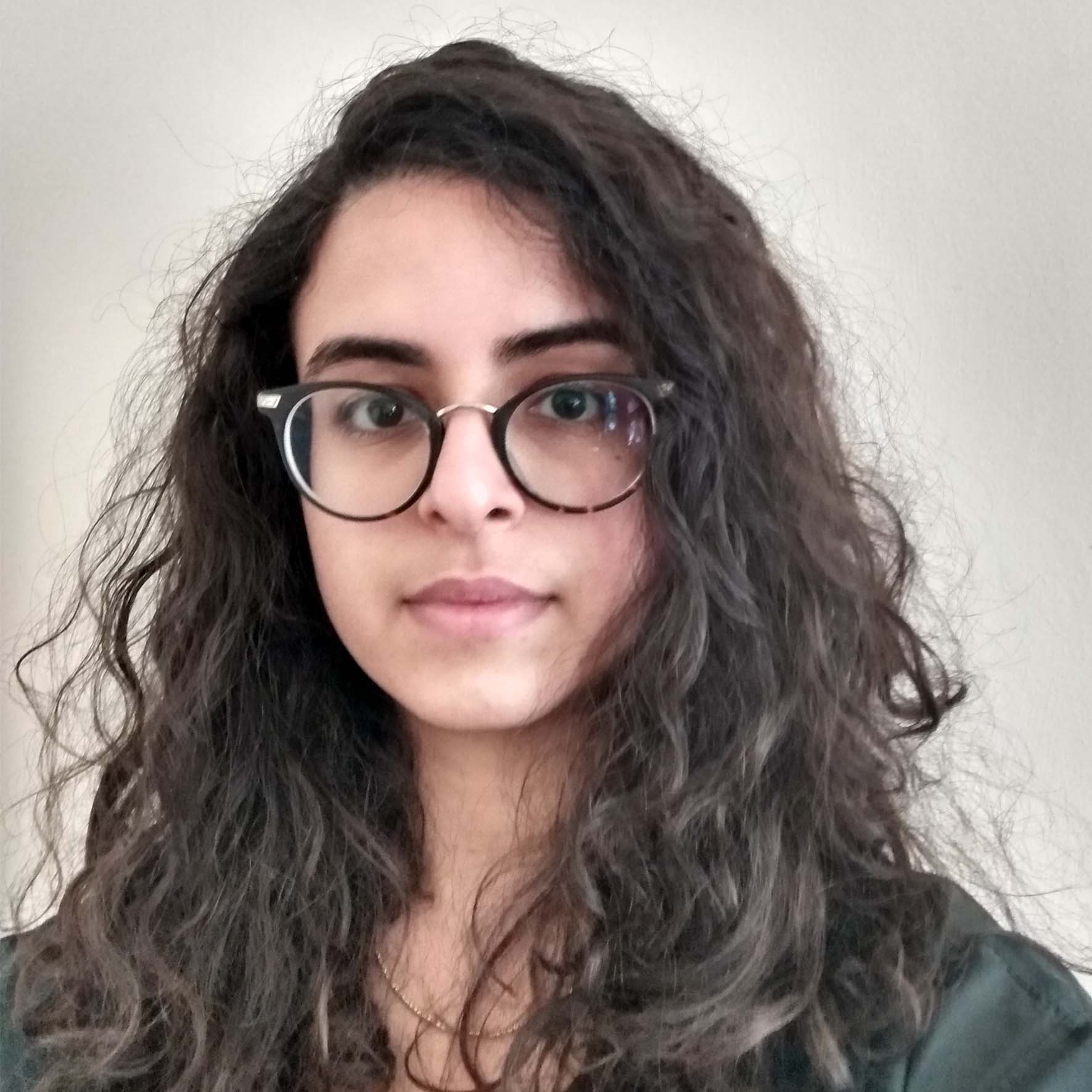
Mor Cohen is a Leverhulme EC fellow at the department of Geography, University of Sheffield. Her research examines spaces of dissent and the politics of art in Israel/Palestine since the 1970s. She's currently based in Manchester.